Thumbnail 2
Thumbnail 1
Thumbnail 3
virdrun Pfeil
nächst Pfeil
Thumbnail 2
virdrun Pfeil
nächst Pfeil

Biomass Granulator

Kapazitéit1TPH / 1,5 TPH / 2,5 TPH

Motor Muecht30-45kW an

Granular Duerchmiesser2-10mm

Applikatioun BeräicherLandwirtschaft, chemesch Industrie, Bausecteur, Liewensmëttel Veraarbechtung Industrie, Ëmweltschutz Industrie, Biergbau Industrie, Biomass pelletizing Industrie, etc.

De Biomass Granulator, speziell der flaach stierwen Pellet Press, déngt als pivotal Ausrüstung bei der Virveraarbechtung vu Biomassenergie. Ausserdeem, et transforméiert haaptsächlech landwirtschaftlech a Bëschoffall, wéi Holzspäicher, Stréi, Räis Schëss, a scharf, an eng erneierbar Energiequell. Andeems Dir eng Serie vu Virveraarbechtung a Veraarbechtungsschrëtt erliewt, d'Biomass Material ass effektiv an héich-Dicht Pellet Brennstoff solidified. This technology not only capitalizes on otherwise discarded raw materials but also significantly contributes to the creation of a more sustainable fuel alternative. Sou, flat die pellet press, with its unique design, stands out for its efficiency and simplicity, offering users a practical solution in the biomass pellet production process. Zousätzlech, the adaptability of this machine to various biomass inputs makes it a versatile choice for different industry requirements, leading to broader implications for energy production and environmental conservation.

What The Applications of Flat Die Biomass Pellet Mill ?

The market for biomass pellet machines, specifically the flat die, is rapidly expanding as industries seek renewable alternatives to fossil fuels. These machines cater to the growing demand for sustainable energy generation, landwirtschaftlech Offall an eng liewensfäeg an ëmweltfrëndlech Brennstoffquell ëmsetzen.
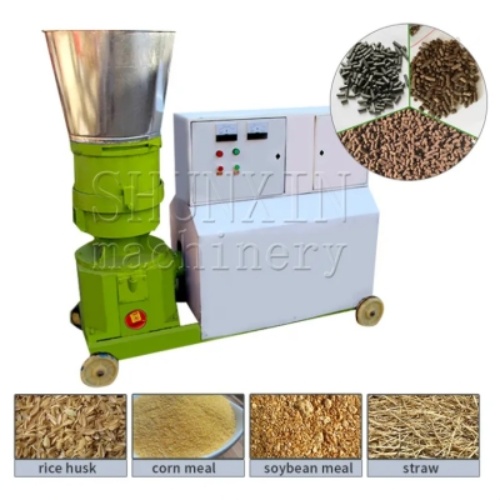
Flat Die Pellet Mill spillt eng entscheedend Roll bei der Produktioun vu Biomass Brennstoffer, benotzt eng Vielfalt vun landwirtschaftlechen Offallmaterialien wéi Maisstämm, Weess Stréi, Reis Stréi, Erdnussschielen, Mais Kären, Koteng Steng, sojabohn Steng, Onkraut, Filialen, Blieder, Séi, a scharf. Dann, Dir kënnt et benotze fir zolidd Offallmaterialien duerch Zerkleschung ze veraarbechten, Kompressioun, Verdichtung, a Formen fir kleng zylindresch zolidd Pelletbrennstoff ze kreéieren. Zum Beispill, Séi a Stréi sinn allgemeng benotzt Rohmaterial fir Biomass Pelletsproduktioun.

D'Pellets produzéiert vun der flaach Die Pellet Maschinn déngen als eng nei Aart vu Bioenergie, kapabel Brennholz z'ersetzen, Kuel, Brennstoff Ueleg, a flëssege Petrol Gas. They are widely utilized for heating in residential stoves, hot water boilers, industrial boilers, and biomass power plants.

  1. Residential Heating and Energy: Biomass pellets have high fuel efficiency and are easy to store, making them ideal for residential heating and everyday energy needs.
  2. Biomass Industrial Boilers: As a primary fuel for industrial boilers, these pellets can supplant coal, thus reducing atmospheric emissions and pollution.
  3. Power Generation: Biomass pellets can act as a fuel for thermal power generation, contributing to the diversification of energy sources and reducing reliance on fossil fuels.


Als Conclusioun, the market for the flat die pellet machine is experiencing significant growth due to its effectiveness in producing biomass pellets from a wide range of organic materials. These pellets, in turn, find extensive applications in heating and power generation, providing a renewable energy solution that enhances fuel utilization rates, facilitates storage, and mitigates environmental pollution.

25% Content

What Kind of Finished Granules Can A Biomass Pelletizer Produce ?

  • Granular DensityThe granules produced by a biomass pelletizer possess a uniform density, typically ranging from 0.6 zu 0.8 g/cm³ before pressing. After the process, the finished pellets boast a density greater than 1.1 g/cm³, reaching up to 1.5 g/cm³. Sou, this increase in density translates to ease of transport and storage, as the pellets are more compact and take up less space.

  • Pellet AppearanceIn terms of appearance, the pellets are a light yellow, cylindrical shape with a diameter ranging from 6 zu 10 millimeters, which allows for consistent combustion and efficient handling. Ausserdeem, den Äschegehalt vun dëse Pellets ass niddereg, normalerweis manner wéi 2%, beweist e minimale Rescht nom Verbrennen an dréit zur propperer Verbrennung bäi.

  • Waasser Inhalt vun fäerdeg Biomass Pellets – Zousätzlech, Feuchtigkeitgehalt ass en anere kriteschen Faktor, an Pellets aus engem Biomass pelletizer hunn eng Fiichtegkeet zréck Niveau vun 7 zu 10%. Well dës Gamme optimal ass fir d'strukturell Integritéit vun de Pellets z'erhalen, wärend se suergen datt se effektiv verbrennen.

  • Verbrennung & Thermesch Effizienz Erhéijung – Verbrennung an thermesch Effizienz si Schlësselleistungsindikatore fir Biomass Pellets. Ausserdeem, der Pellets produzéiert vun engem flaach stierwen Pellet Maschinn hunn eng Verbrennungsmotor Taux vun iwwer 98%, garantéiert datt se bal komplett verbrennen. Ausserdeem, si erreechen eng héich thermesch Effizienz Taux vun iwwer 81%, garantéiert datt méi Hëtzt aus all Pellet generéiert gëtt, doduerch hir Nëtzlechkeet als Brennstoffquell verbesseren.

Als Conclusioun, a biomass pelletizer, with a focus on the flat die pellet machine, produces high-density, cylindrical pellets that are dry, with low ash and optimal moisture content. Ausserdeem, these characteristics not only enhance the pelletsstorage and handling properties but also ensure efficient and clean combustion, making them a practical choice for those seeking an eco-friendly and potent energy source.

50% Content
Kontaktéiert eis

Fill in the fields and our team will help you design perfect fertilizer production proposal!


    Why Is The Biomass Flat Die Granulator Popular In The Market?

    When considering the production of biomass pellets, the advantages of a biomass pellet machine, particularly the flat die pellet machine, become apparent. These machines offer a range of benefits that cater to both environmental and economic demands.
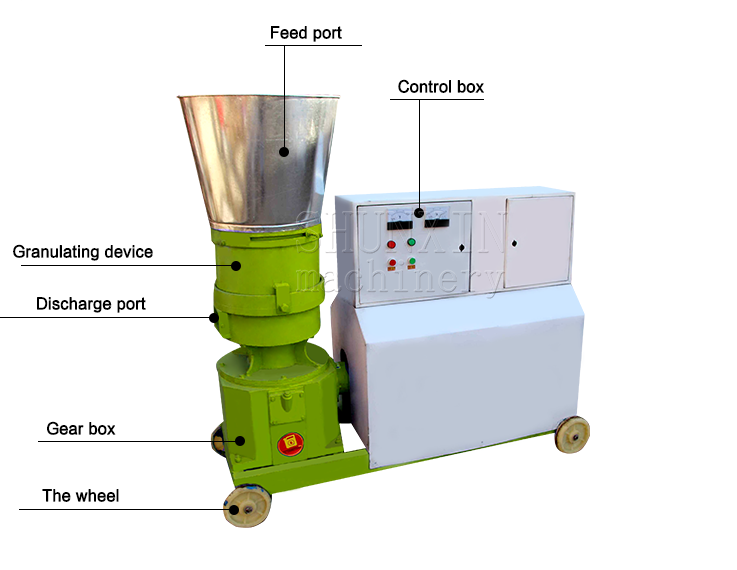
    Als éischt, the flat die pellet machine operates with a straightforward design, making it easier to manage and maintain. It processes raw materials efficiently, ensuring that the user can achieve high productivity rates. Zousätzlech, this type of pellet machine often requires less energy to operate compared to other pelletizing machinery, which can lead to cost savings in the long run.

    From an economic standpoint, biomass pellet machines convert waste materials into valuable products, thus reducing the costs associated with waste disposal. They utilize a wide array of raw materials, such as sawdust, crop residues, and other biomass waste, which are often readily available and inexpensive. By transforming these materials into high-density biomass pellets, the machine adds value and creates a potential source of revenue.

    Environmentally, the biomass pellet machine supports sustainability efforts. The pellets produced are a renewable energy source, which can help reduce reliance on fossil fuels. Ausserdeem, by utilizing waste products, these machines contribute to waste reduction and promote a circular economy.

    The flat die pellet machine is known for producing pellets with uniform size and shape, which are essential for consistent combustion. The durability of these pellets is also noteworthy, as they are less likely to crumble during handling or storage. This robustness ensures minimal waste and efficient use of the material.

    In summary, biomass pellet machines, with a focus on the flat die variety, provide users with a range of advantages, including operational efficiency, cost-effectiveness, and environmental benefits.

    75% Content

    How Does A Flat Die Biomass Pellet Mill Work?

    • Als éischt, flat die pellet mill consists of a flat die with multiple holes, a set of rollers, a hopper for material input, and a cutting mechanism for pellet sizing. The flat die serves as the foundation where pellet formation takes place, and the rollers apply pressure to the raw material, forcing it through the die holes.

    • Dann, as you feed raw materials into the hopper, they fall onto the flat die. The rollers then roll across the surface, pressing the materials through the die holes. During this phase, the compression and friction generate heat, which softens the lignin in the biomass, acting as a natural binder. As the materials pass through the die holes, they become denser and take the shape of cylindrical pellets.

    • Wat méi ass, once the materials have been extruded through the die holes, the cutters trim the emerging pellets to the desired length. Konsequent, the pellets are discharged from the pellet mill, ready for cooling and subsequent use.

    Als Conclusioun, the flat die pellet mill operates through a straightforward process involving pressing raw biomass material through a die, shaping, and cutting it into pellets. This process not only transforms waste material into a useful product but also does so with efficiency and simplicity. Als Resultat, biomass pellets can serve as a renewable energy source or as feedstock for various applications.

    100% Content

    In summary, a flat die pellet press efficiently transforms biomass into compact pellets. Its design ensures a straightforward operation, wou d'Roller Material duerch de Stierf kompriméieren. D'Hëtzt generéiert während der Kompressioun erliichtert d'Bindung vun de Pellets. No der opzedeelen Mechanismus Gréisst hinnen, d'Pellets kommen prett fir ze benotzen. Dës Technologie bitt eng effektiv Léisung fir d'Gestioun vu Biomass Offall an d'Schafung vun erneierbaren Energiequellen.