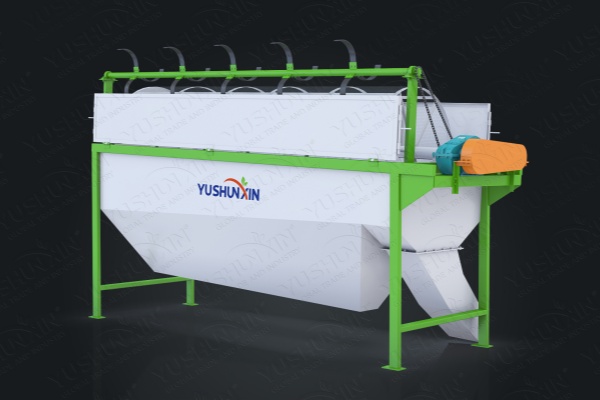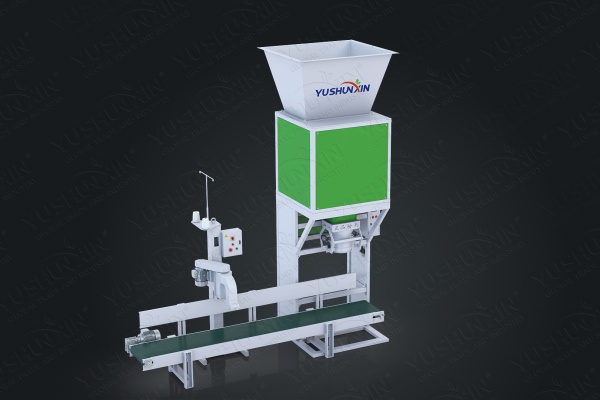
Miniatura 2
Miniatura 1
Miniatura 3
vleġġa preċedenti
vleġġa li jmiss
Miniatura 2
vleġġa preċedenti
vleġġa li jmiss

Granulatur tal-Bijomassa

Kapaċità1TPH/1.5TPH/2.5TPH

Qawwa tal-Mutur30-45kW

Dijametru Granulari2-10mm

Oqsma ta' ApplikazzjoniAgrikolu, industrija kimika, settur tal-kostruzzjoni, industrija tal-ipproċessar tal-ikel, industrija tal-protezzjoni ambjentali, industrija tal-minjieri, industrija tal-pelletizing tal-bijomassa, eċċ.

Il-granulatur tal-bijomassa, speċifikament l-istampa tal-pellet die ċatt, iservi bħala biċċa ta 'tagħmir ċentrali fl-ipproċessar minn qabel tal-enerġija tal-bijomassa. Barra minn hekk, primarjament tittrasforma l-iskart agrikolu u tal-forestrija, bħal ċipep tal-injam, tiben, qxur tar-ross, u qoxra, f’sors ta’ enerġija rinnovabbli. Billi tgħaddi minn serje ta 'passi ta' preproċessar u proċessar, il-materjal tal-bijomassa huwa ssolidifikat b'mod effettiv fi fjuwil tal-pellets ta 'densità għolja. Din it-teknoloġija mhux biss tikkapitalizza fuq materja prima mormija iżda tikkontribwixxi wkoll b'mod sinifikanti għall-ħolqien ta' alternattiva tal-fjuwil aktar sostenibbli. Għalhekk, istampa tal-pellet die ċatt, bid-disinn uniku tagħha, jispikka għall-effiċjenza u s-sempliċità tiegħu, li toffri lill-utenti soluzzjoni prattika fil-proċess tal-produzzjoni tal-pellets tal-bijomassa. Additionally, the adaptability of this machine to various biomass inputs makes it a versatile choice for different industry requirements, leading to broader implications for energy production and environmental conservation.

What The Applications of Flat Die Biomass Pellet Mill ?

The market for biomass pellet machines, specifically the flat die, is rapidly expanding as industries seek renewable alternatives to fossil fuels. These machines cater to the growing demand for sustainable energy generation, converting agricultural waste into a viable and eco-friendly fuel source.
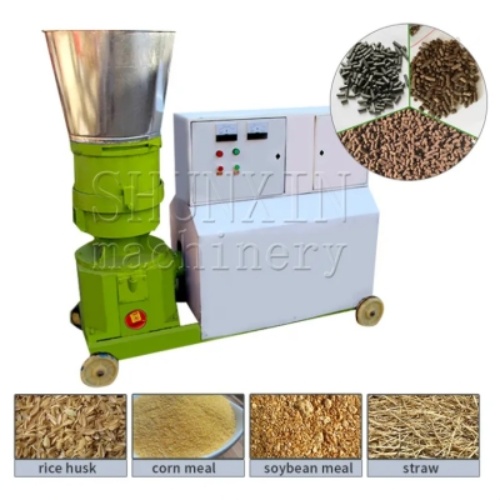
Flat die pellet mill plays a crucial role in the production of biomass fuels, utilizing a variety of agricultural waste materials such as corn stalks, wheat straw, rice straw, peanut shells, maize cores, zkuk tal-qoton, sojja zkuk, ħaxix ħażin, fergħat, weraq, serratura, u qoxra. Imbagħad, tista 'tużaha biex tipproċessa materjali ta' skart solidu permezz tat-tgħaffiġ, kompressjoni, densifikazzjoni, u l-iffurmar biex jinħoloq karburant tal-pellet solidu ċilindriku żgħir. Per eżempju, is-serratura u t-tiben huma materja prima użata komunement għall-produzzjoni tal-pellets tal-bijomassa.

Il-gerbub prodotti mill-magna tal-pellet die ċatt iservu bħala tip ġdid ta 'bijoenerġija, kapaċi jissostitwixxi l-ħatab, faħam, żejt tal-fjuwil, u gass taż-żejt likwifikat. Dawn huma utilizzati ħafna għat-tisħin fi stufi residenzjali, bojlers tal-misħun, bojlers industrijali, u impjanti tal-enerġija tal-bijomassa.

  1. Tisħin Residenzjali u Enerġija: Il-gerbub tal-bijomassa għandhom effiċjenza għolja fil-fjuwil u huma faċli biex jinħażnu, jagħmluhom ideali għat-tisħin residenzjali u l-ħtiġijiet ta 'kuljum ta' l-enerġija.
  2. Bojlers Industrijali tal-Bijomassa: Bħala karburant primarju għall-bojlers industrijali, these pellets can supplant coal, thus reducing atmospheric emissions and pollution.
  3. Power Generation: Biomass pellets can act as a fuel for thermal power generation, contributing to the diversification of energy sources and reducing reliance on fossil fuels.


Bħala konklużjoni, the market for the flat die pellet machine is experiencing significant growth due to its effectiveness in producing biomass pellets from a wide range of organic materials. These pellets, in turn, find extensive applications in heating and power generation, providing a renewable energy solution that enhances fuel utilization rates, facilitates storage, and mitigates environmental pollution.

25% Kontenut

What Kind of Finished Granules Can A Biomass Pelletizer Produce ?

  • Granular DensityThe granules produced by a biomass pelletizer possess a uniform density, typically ranging from 0.6 to 0.8 g/cm³ before pressing. After the process, the finished pellets boast a density greater than 1.1 g/cm³, reaching up to 1.5 g/cm³. Għalhekk, this increase in density translates to ease of transport and storage, as the pellets are more compact and take up less space.

  • Pellet AppearanceIn terms of appearance, the pellets are a light yellow, cylindrical shape with a diameter ranging from 6 to 10 millimeters, which allows for consistent combustion and efficient handling. Barra minn hekk, the ash content of these pellets is low, usually less than 2%, indicating minimal residue after burning and contributing to cleaner combustion.

  • Water Content of Finished Biomass PelletsAddtionally, moisture content is another critical factor, and pellets from a biomass pelletizer have a moisture level of 7 to 10%. Because this range is optimal for maintaining the structural integrity of the pellets while ensuring they burn effectively.

  • Combustion & Thermal Efficiency EnhancementCombustion and thermal efficiency are key performance indicators for biomass pellets. Besides, the pellets produced by a flat die pellet machine have a combustion rate of over 98%, ensuring that they burn almost completely. Barra minn hekk, they achieve a high thermal efficiency rate of over 81%, ensuring more heat is generated from each pellet, thereby improving their utility as a fuel source.

Bħala konklużjoni, a biomass pelletizer, with a focus on the flat die pellet machine, produces high-density, cylindrical pellets that are dry, with low ash and optimal moisture content. Barra minn hekk, these characteristics not only enhance the pelletsstorage and handling properties but also ensure efficient and clean combustion, making them a practical choice for those seeking an eco-friendly and potent energy source.

50% Kontenut
Ikkuntattjana

Imla l-oqsma u t-tim tagħna jgħinek tiddisinja proposta ta 'produzzjoni ta' fertilizzant perfetta!


    Why Is The Biomass Flat Die Granulator Popular In The Market?

    When considering the production of biomass pellets, the advantages of a biomass pellet machine, particularly the flat die pellet machine, become apparent. These machines offer a range of benefits that cater to both environmental and economic demands.
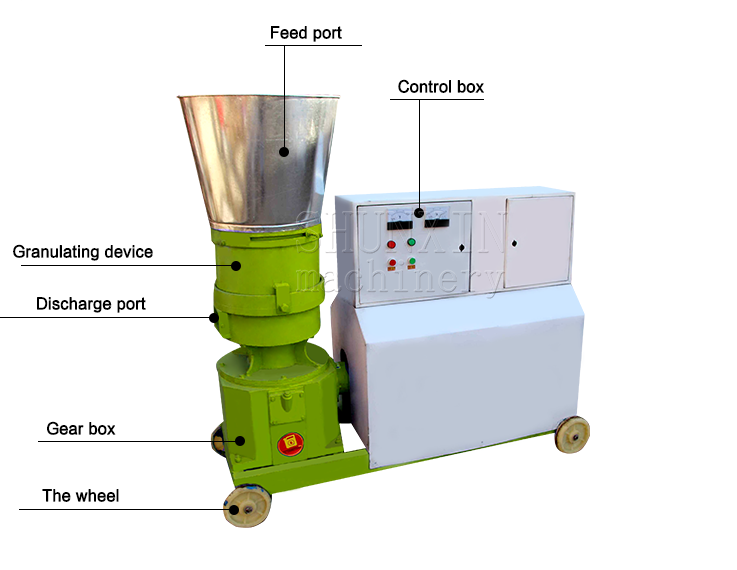
    L-ewwelnett, the flat die pellet machine operates with a straightforward design, making it easier to manage and maintain. It processes raw materials efficiently, ensuring that the user can achieve high productivity rates. Additionally, this type of pellet machine often requires less energy to operate compared to other pelletizing machinery, which can lead to cost savings in the long run.

    From an economic standpoint, biomass pellet machines convert waste materials into valuable products, thus reducing the costs associated with waste disposal. They utilize a wide array of raw materials, such as sawdust, crop residues, and other biomass waste, which are often readily available and inexpensive. By transforming these materials into high-density biomass pellets, the machine adds value and creates a potential source of revenue.

    Environmentally, the biomass pellet machine supports sustainability efforts. The pellets produced are a renewable energy source, which can help reduce reliance on fossil fuels. Barra minn hekk, by utilizing waste products, these machines contribute to waste reduction and promote a circular economy.

    The flat die pellet machine is known for producing pellets with uniform size and shape, which are essential for consistent combustion. The durability of these pellets is also noteworthy, as they are less likely to crumble during handling or storage. This robustness ensures minimal waste and efficient use of the material.

    In summary, biomass pellet machines, with a focus on the flat die variety, provide users with a range of advantages, including operational efficiency, cost-effectiveness, and environmental benefits.

    75% Kontenut

    How Does A Flat Die Biomass Pellet Mill Work?

    • L-ewwelnett, flat die pellet mill consists of a flat die with multiple holes, a set of rollers, a hopper for material input, and a cutting mechanism for pellet sizing. The flat die serves as the foundation where pellet formation takes place, and the rollers apply pressure to the raw material, forcing it through the die holes.

    • Imbagħad, as you feed raw materials into the hopper, they fall onto the flat die. The rollers then roll across the surface, pressing the materials through the die holes. During this phase, the compression and friction generate heat, which softens the lignin in the biomass, acting as a natural binder. As the materials pass through the die holes, they become denser and take the shape of cylindrical pellets.

    • X'hemm aktar, once the materials have been extruded through the die holes, the cutters trim the emerging pellets to the desired length. Consequently, the pellets are discharged from the pellet mill, ready for cooling and subsequent use.

    Bħala konklużjoni, the flat die pellet mill operates through a straightforward process involving pressing raw biomass material through a die, shaping, and cutting it into pellets. This process not only transforms waste material into a useful product but also does so with efficiency and simplicity. As a result, biomass pellets can serve as a renewable energy source or as feedstock for various applications.

    100% Kontenut

    In summary, a flat die pellet press efficiently transforms biomass into compact pellets. Its design ensures a straightforward operation, where the rollers compress material through the die. The heat generated during compression facilitates the binding of the pellets. After the cutting mechanism sizes them, the pellets emerge ready for use. This technology offers an effective solution for biomass waste management and the creation of renewable energy sources.