Frequently asked questions.
Frequently asked questions.
We’ve put together some commonly asked questions to give you more information about Granulador de extrusão de rolos duplos we offer.
If you have a question that you can’t find the answer, please use the contact page!
Phosphate Fertilizer Granulation Equipment In Egyptian Factory
4 Main Steps to Transform Lime Powder into 3mm Fertilizer Pellets
To produce 3mm mineral fertilizer particles from limestone powder, you must follow several crucial steps using the right equipment.
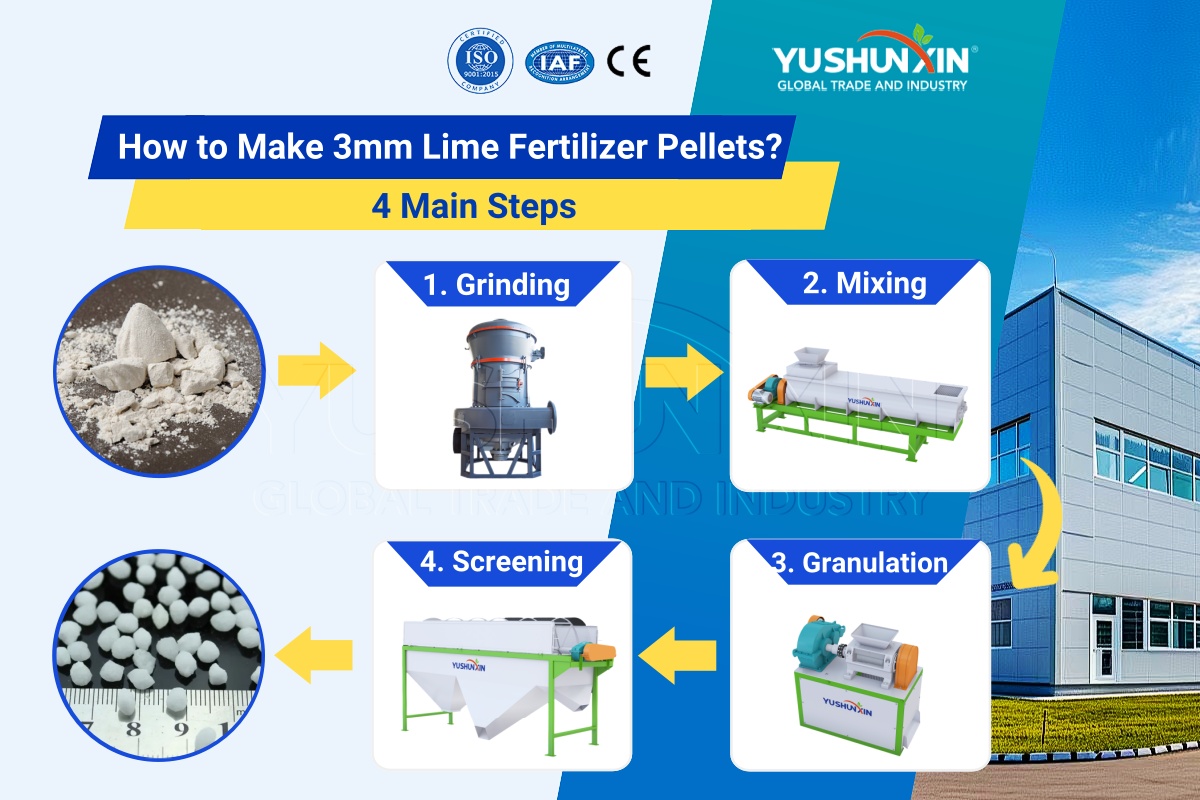
Portanto, selecting the right machinery is essential for producing high-quality lime fertilizer pellets.
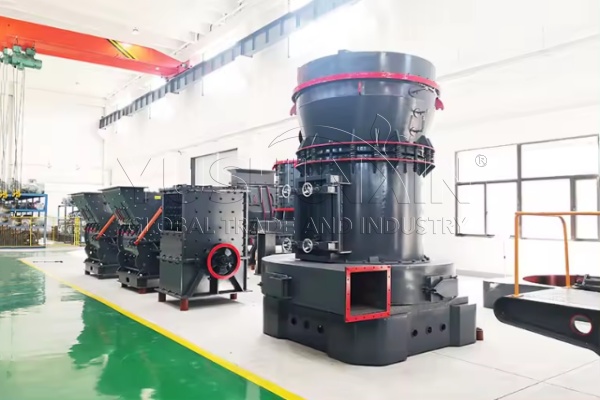
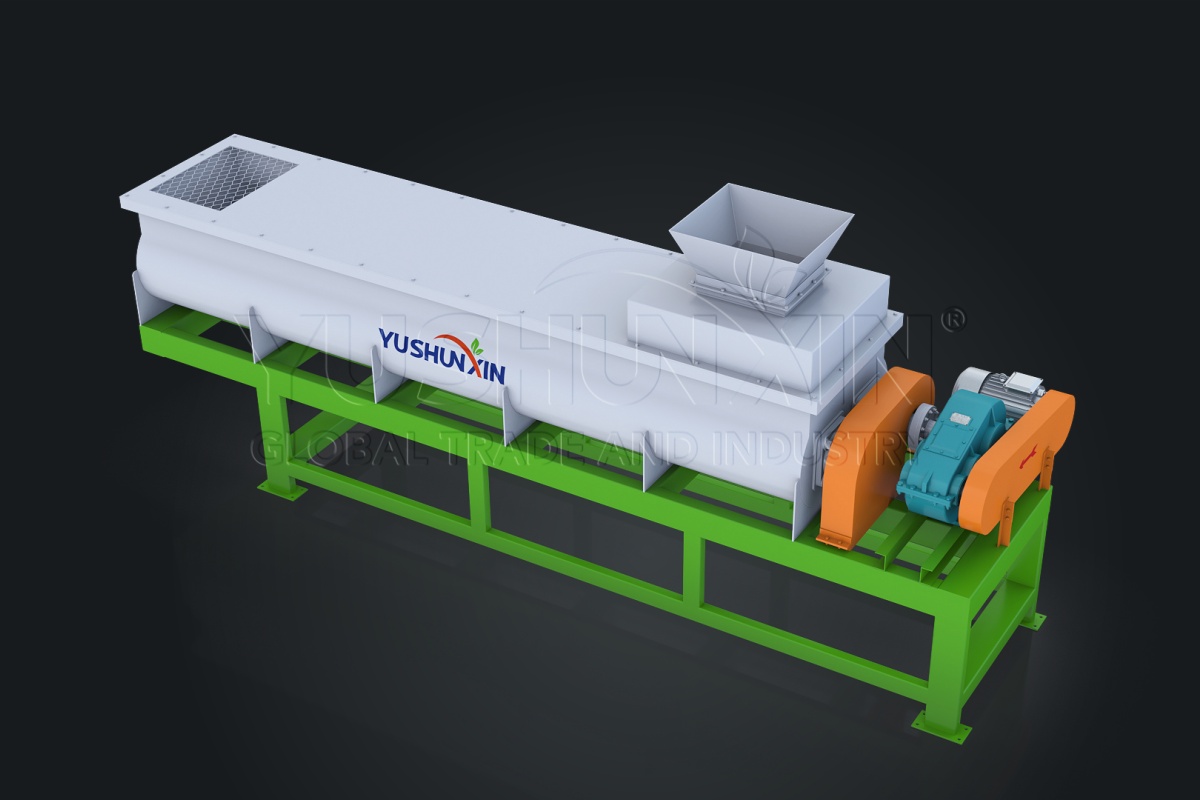
What Auxiliary Equipment Are Necessary for Lime Powder Granulation?
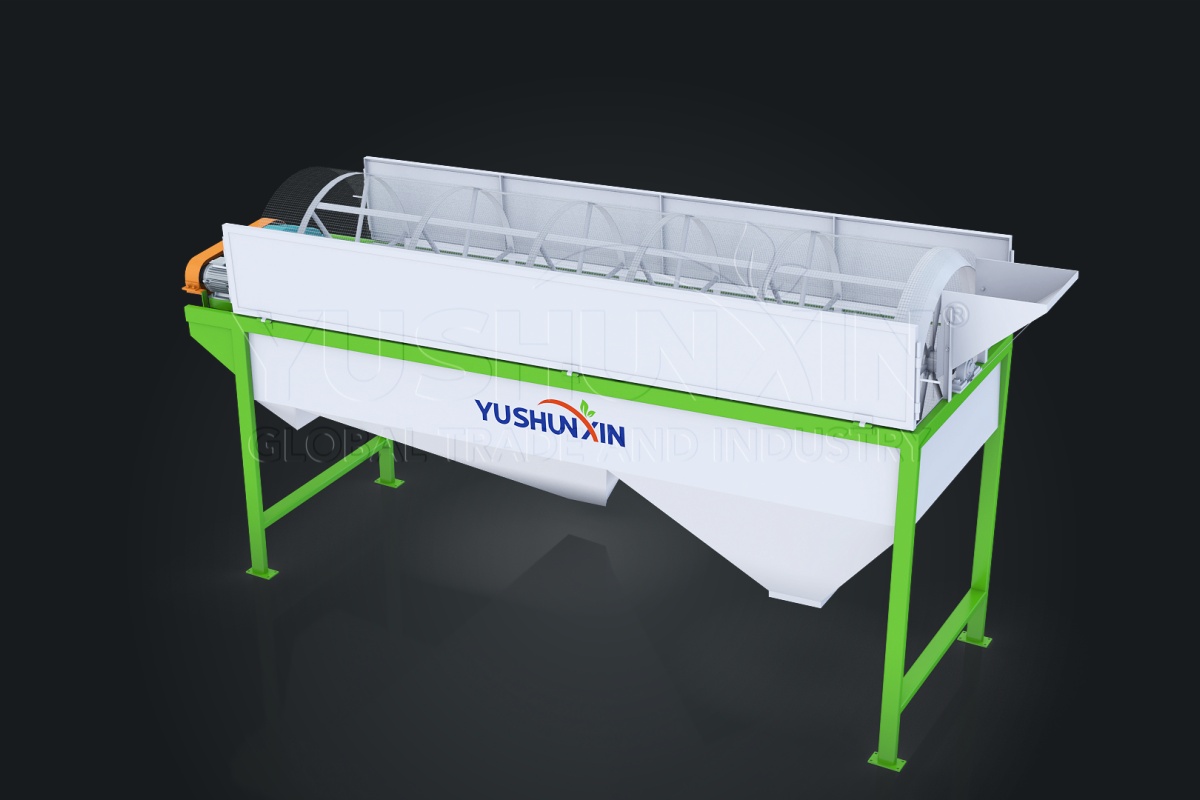
Phosphate Fertilizer Granulation Equipment In Egyptian Factory
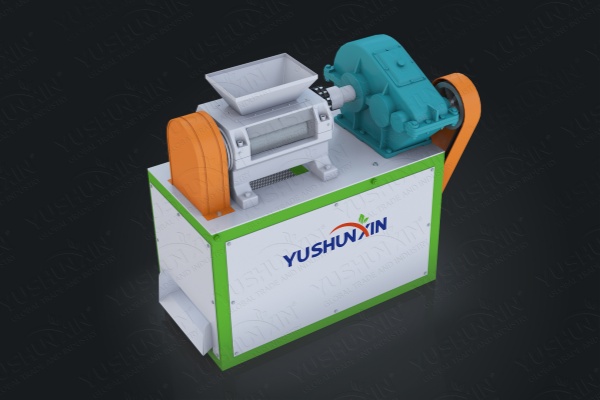
How Can A Dry Extrusion Granulator Reduce Organic Fertilizer Granule Production Cost?
irstly, using a double roller press granulator is one of the most economical ways to produce organic fertilizer granules. This pelletizer utilizes dry granulation. Também, it forms organic fertilizer pellets through mechanical extrusion without the need for water or binders. Por isso, this machine greatly reduces equipment investment, such as dryers, coolers, and dust removal systems.
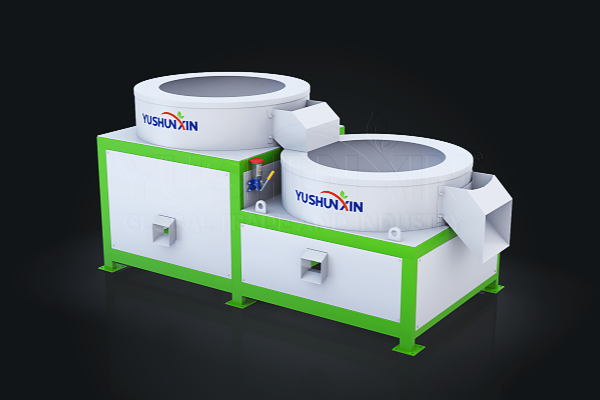
How to Achieve Beautiful Round Appearance of Organic Fertilizer Granules?
The shape of organic fertilizer particles produced by a dry granulator may not achieve perfect roundness. To make the granular organic fertilizers look more attractive, you can purchase a polishing machine. No matter what irregular shape the initial fertilizer granules are, the machine can roll them into smooth and spherical balls in one process, with a high ball forming rate and no return material. Então, this process improves granule quality and increases their market appeal.
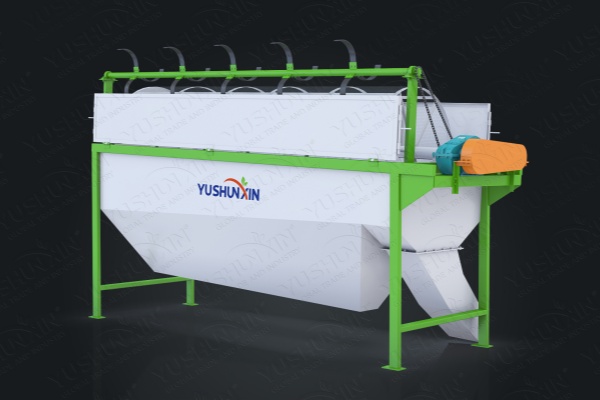
Why Use A Screening Machine for Low Budget Organic Fertilizer Production Plan?
Besides, you choose to purchase a rotary screening machine to ensure uniform organic fertilizer granule size. Because consistent granule size can improve the quality of your organic fertilizer product. Its strong sorting capability eliminates oversized or undersized granules, allowing direct packaging of high-quality fertilizer.
How Do Different Raw Materials Affect Roller Die Lifespan?
There are several factors influencing the lifespan of roller shells of dry roller press granulator, including the type of raw materials during the extrusion granulation process. Além disso, roller molds are essential components, directly impacting the efficiency and longevity of the entire extruder granulation equipment. Here is an analysis of common raw materials and their impact on roller die longevity.

≤1500 Tons of Common NPK Powder Dry Granulation
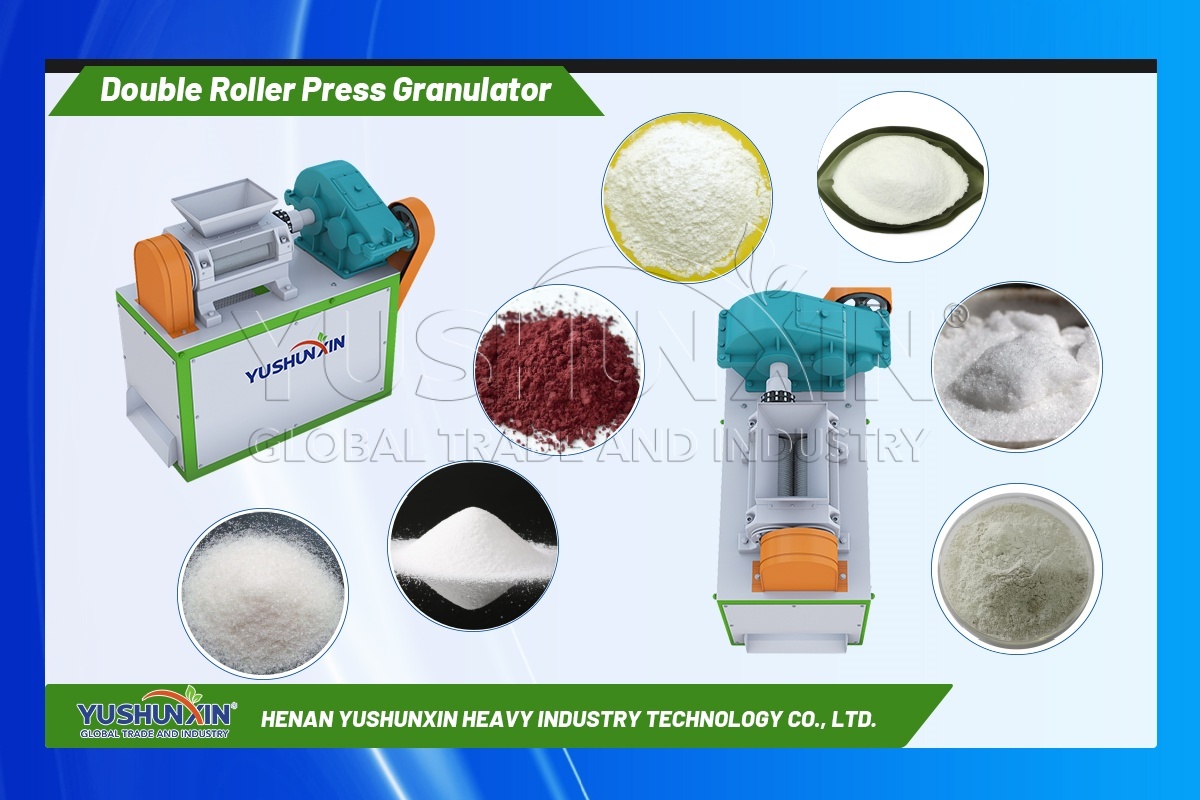
Na verdade, if you use common NPK materials or certain mineral powders, it won’t cause more wear and tear on the rollers. Tipicamente, under standard conditions, double roller fertilizer granulator can last up to 1500 toneladas de NPK granular fertilizer production. Por exemplo, urea, sulfato de amônio, cloreto de amônio, calcium carbonate, limestone, zeolite, bentonite and other similar powder or lumps. Além disso, when extruding NPK fertilizer powder directly for granulation, you needn’t to add other auxiliary materials. No entanto, if you make compound fertilizer granules from finer mineral powder, the extrusion pressure between the two rollers alone is not enough forming. Também, you can add 20% water appropriately for better granulation effect.

≤800 Tons of Corrosive Materials Roller Press Granulating

In general, some compound fertilizer materials are slightly acidic. When the rollers press these materials, the temperature will rise up. Portanto, through certain physical and chemical reactions, these raw materials can corrode the roll coating and ball socket shape over a long period of time. Honestamente, this extruder pelletizer can produce approximately 800 tons of fertilizer granules from corrosive substance. Por exemplo, you can use cloreto de amônio, potassium nitrate, calcium chloride, calcium nitrate, manganous sulfate, fosfato monoamônico, etc.. to make fertilizer pellets. Além disso, regular cleaning and maintenance can extend the service life of the roll dies.

≤500 Tons of Organic Fertilizer Granule Compact Production
De fato, organic fertilizer granulation raw materials include chicken manure, pig manure, Resíduos de cozinha, sawdust, bean dregs, biogas residues, mushroom residues and so on. No começo, you should handle these materials by compost machines for fermentation and decomposition. After organic fertilizer composting, these materials contain 30-35% moisture content. And you’d better age to reduce water for a few days before granulation. Because organic compost has high moisture and strong stickiness, it is easy to clog and damage the roll molds. Como resultado, double roller compaction pelletizer has a maximum lifespan of processing 500 toneladas of organic waste.
How to Extend The Service Life of Fertilizer Roller Granulator Machine?
Proper maintenance can significantly extend the service life of roller granulating machine. Primeiramente, regular cleaning is crucial. And you remove residues, especially when processing corrosive materials. Segundo, proper lubrication reduces friction and prevents the machine parts from wearing out prematurely. Além disso, operators should avoid overloading the granulator, as excessive load can accelerate wear. Por último, you should frequently inspect the roller skins for wear and tear. Então, you can replace worn-out parts promptly to prevent further damage.
Top 2 Metal Materials of Double Roller Sheets For Your Choice
The roller skin is a vital component of a double roller granulator, playing a pivotal role in the organic fertilizer or compound fertilizer granulating process. As you operate this machinery, good roller skin benefits the granule production efficiency and longevity of this equipment, and the quality of the final pellets. Por isso, choosing the appropriare material to make the roller sheets is our duty for customers’ actual fertilizer granulation and cost-effectiveness.
Traditional Roller Skin Material of 20CrMoTi For Common Usage
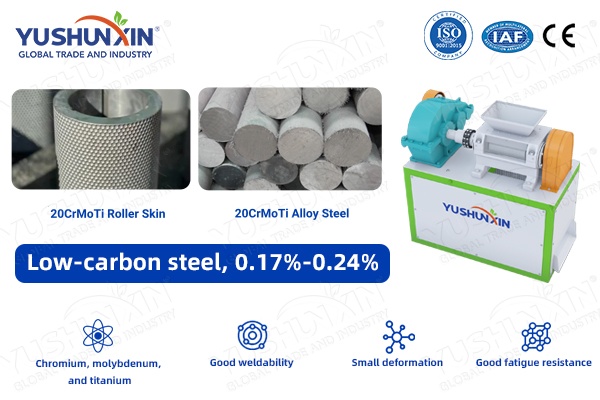
Para ser honesto, most of the roller press granulators on the market use 20CrMoTi as roller sheets. De fato, it is a GB standard structural alloy steel with high performance. Também, it’s a carburizing steel, which is usually a low-carbon steel with a carbon content of 0.17%-0.24%. The composition of 20CrMoTi includes chromium, molybdenum, and titanium. After quenching, it contributes to the roller sheets’ hardness and wear resistance, meeting intense requirements of the dry granulation process. Adicionalmente, 20CrMnTi steel has good weldability, small deformation, and good fatigue resistance. So we can easily carve all kinds of shapes for ball socket on the roller skins according to client’s needs. Its good hardness and toughness and can maintain roll dies non-deformation under high pressure over an extended period. Por isso, we ensure that our extrusion granulators meet the rigorous demands of modern industrial applications by using 20GrMoTi.
New Roller Skin Material of 4Cr13 For High-quality Granulation
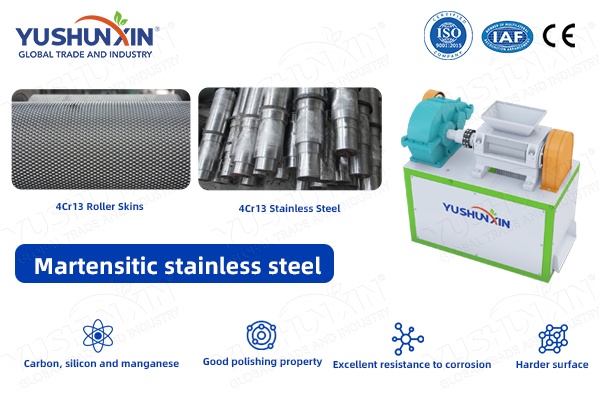
In recently years, our company applies new material to manufacture double roller compact granulator, 4Cr13. Compared to the traditional alloy steel, 4Cr13 is martensitic stainless steel. Além disso, the special composition of 4Cr13 steel, including carbon, silicon and manganese content, contributes to its outstanding properties. Our factory quenches the roller dies made of 4Cr13 steel to get a harder surface. Compared to other steels, it is worth mentioning its excellent resistance to corrosion and polishing performance. Então, the polishing property of this material also contribute to the beautiful and smooth surface of the roll pelletizer we produce. Portanto, this customization roll die of roller pressing granulator is ideal for handling corrosive raw materials like animal manure, etc.. It prevents raw materials from sticking to the ball socket and corroding the equipment. Above all, using 4Cr13 steel as the roll dies’ material extends granulator’s service life in industrial granulation process.
What Is The Cost Difference Between Roller Sheet Materials 20CrMnTi And 4Cr13?
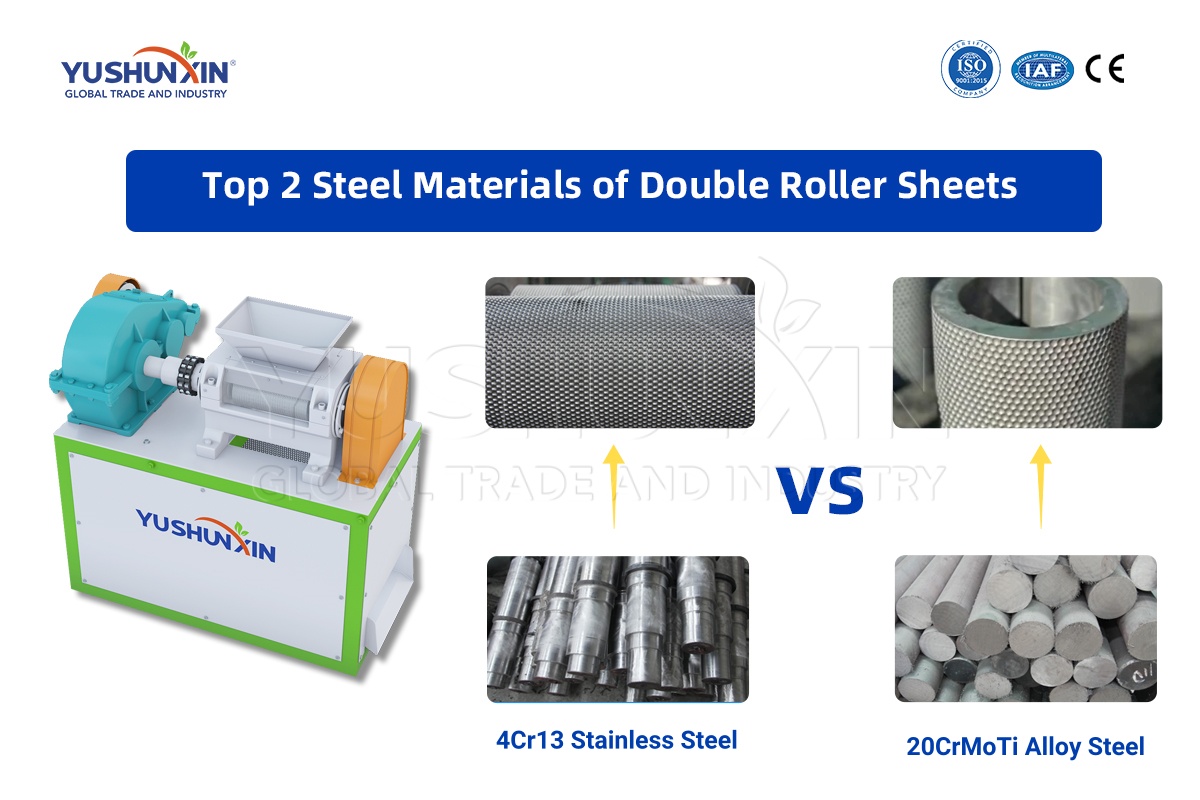
As a professional fertilizer equipment manufacturer, Yushunxin provides detailed information on the cost difference between roller sheet materials 20CrMnTi and 4Cr13. The market price for 20CrMnTi is approximately $1.2–$1.5 per kilogram, while 4Cr13 ranges from $2.0–$2.5 per kilogram. Tipicamente, a roller granulator with a capacity of 1 tonelada por hora, is priced around $4000. Além disso, the roller molds made from 20CrMnTi would cost about $240-$300. In contrast, molds made from 4Cr13 would cost approximately $480-$600. Por isso, customers can evaluate the material choice based on budget and performance needs.
O granulador de extrusão de rolos duplos, also known as a dry granulation press or roller compactor, is a pivotal piece of equipment in the granulation process, which transforms fine powders into densified and compacted granules. The machine’s structural material is of paramount importance, as it needs to endure continuous operational stress and strain. For this reason, the main frame and components of the extrusion granulator are constructed from boiler steel, specifically the Q235 grade.
This material is renowned for its impressive strength and resilience, making it an excellent choice for heavy-duty machinery. Q235 boiler steel is characterized by its high tensile strength and yield point, ensuring that the machinery can withstand the substantial pressure exerted during the compaction process. Além disso, its resistance to deformation and cracking under stress guarantees a long service life for the granulator, ultimately leading to reduced maintenance requirements and operational downtime.
Por isso, the utilization of Q235 boiler steel in the construction of the extrusion granulator not only ensures the robustness and longevity of the machinery but also underpinning the reliability and consistency of the granulation process.
The double roller press granulator is a versatile tool for dry powder granulation, comfortably processing a wide array of chemical and organic materials.
1. Raw Materials in NPK Fertilizer Production
A double roller extrusion granulator, utilizing roller compaction technology, efficiently processes an extensive range of materials in fertilizer production. These materials include compound fertilizers such as ammonium sulfate and ammonium nitrate, phosphate fertilizers like monoammonium phosphate (MAP) and diammonium phosphate (DAP), potash, and so on.
2. Handling Organic Materials for Fertilizer Production
Besides chemical fertilizers, the granulator excels in processing organic materials pivotal for organic fertilizer production. Examples include animal manure, compost, and sludge, which are crucial components of organic fertilizers. Its efficiency, adaptabilidade, and reliability make it a preferred choice for organic fertilizer manufacturers seeking high-quality granulation proposals.
3. Other Applications in Dry Powder Granulation
Beyond fertilizer production, the double roller extrusion granulator finds application in various industries requiring dry powder granulation. Adicionalmente, it’s utilized in the chemical industry for the compaction of powdered materials into solid forms, facilitating handling and storage. Além disso, the granulator efficiently handles mineral powders, contributing to applications such as metallurgy and mining. Por exemplo, it processes mineral powders into dense granules for use in metallurgical processes or as additives in various industrial applications.
Conclusão
With its capability to process a diverse array of materials, ranging from chemical fertilizers and organic substances to mineral powders, the double roller extrusion granulator emerges as a versatile and indispensable tool in dry powder granulation across multiple industries. Enquanto isso, you should know the key for successful granulation is to understand the material’s characteristics, including particle size, moisture content, and cohesiveness. Slightly adjusting the roller gap and pressure settings allows for the production of granules with the desired density and size.
No começo, you must understand that maintaining a double roller extrusion granulator is essential for it to function optimally. Regular maintenance not only extends the machine’s lifespan but also ensures you get the best performance. As an operator, remember that your attention to maintenance details will prevent unexpected breakdowns and costly repairs.
1. Daily Maintenance Routine
Every day, you should start by cleaning the machine to remove any residual material that could harden and cause blockages. Além disso, you should check the machine’s parts, such as bolts and bearings, to ensure they are tight and in good condition. Também, lubricate the moving parts to reduce wear and tear. Importante, you should inspect the rollers and die for any signs of damage or wear. If you notice any issues, address them immediately to prevent further complications.
2. Weekly Maintenance Tasks
In addition to daily maintenance, there are tasks you should perform weekly. These include a thorough inspection of the electrical system to ensure there are no loose connections or damaged wires. Além do mais, you need to check the pressure of the rollers and adjust if necessary to ensure uniform granules. Além disso, you should find professional engineers to assess the machine’s overall performance and efficiency. If you detect any irregularities, it’s crucial to troubleshoot them promptly.
3. Monthly Maintenance Checks
On a monthly basis, you should conduct more in-depth maintenance. This involves checking the gearbox oil level and quality, and replacing it if needed. Adicionalmente, tou can examine the belts for any signs of wear or slackness and adjust or replace them accordingly. Também, you should test the machine’s safety features to ensure they are functioning correctly. Remember, safety checks are not just about compliance, but they also protect you and your workers from potential hazards.
4. Long-term Maintenance Schedule
Finalmente, for long-term maintenance, you should schedule downtime for the machine at least once a year. During this period, you can perform comprehensive maintenance tasks such as replacing worn-out parts, updating any outdated components, and thoroughly cleaning and inspecting every part of the machine. Adicionalmente, you can contact us for replacement of wearing parts.
Geral, maintaining your double roller extrusion granulator requires diligence and consistency. By following the daily, weekly, monthly, and long-term maintenance schedules, you ensure the machine operates at peak performance for more than 10 years. If you have any further questions or concerns, don’t hesitate to consult the manufacturer’s manual we provide or contact our professional technician for assistance.
1. What Is The Basic Principle?
The fertilizer roller granulator machine operates on the principle of compaction and granulation. Além disso, through the application of pressure, raw materials are compacted into dense masses, which are then broken down into uniform granules. Além do mais, this process occurs without the use of additional moisture, making it ideal for producing dry fertilizer granules.
2. How Does The Extrusion Process Occur?
During operation, the granulator press roller machine utilizes counter-rotating rollers to exert pressure on the raw materials. Então, this pressure forces the materials to pass through the narrow gap between the rollers, resulting in compaction. As the compacted material exits the rollers, it undergoes further processing to form granules of the desired size and shape.
3. What Are The Key Components?
Key components of the roller granulating machine include the extruder, which places the counter-rotating rollers, and the feeding system, responsible for delivering raw materials to the extrusion zone. Adicionalmente, the granulation chamber and discharge system play crucial roles in shaping and collecting the formed granules.
4. What Are the Advantages of Dry Granulation?
Dry granulation offers several advantages over traditional wet granulation methods. By eliminating the need for additional moisture, it reduces production costs and energy consumption. Além disso, dry granulation minimizes the risk of material degradation and contamination, resulting in higher-quality granules.
5. What Are Applications of Press Roller Machine?
Dry roller press granulators find application in various industries, including fertilizer production, chemical manufacturing, mining processing, and food processing. Além disso, they are particularly suitable for producing granular products with specific size and density requirements, making them indispensable in modern manufacturing processes.
1. What Makes the Double Roller Extrusion Granulator Essential?
Primeiramente, double roller extrusion granulator serves as key equipment in compound fertilizer granulation. With advanced technology, estrutura compacta, e baixo consumo de energia, this device operates on the extrusion principle to swiftly form fertilizer granules ranging from 3 to 10mm in diameter.
2. Where Does the Roller Press Granulator Find Application?
Segundo, this dry granulator is indispensable in the production of special compound fertilizers of varying concentrations for diverse crops. Whether high, medium, or low concentration compounds, the roller press granulator can achieve all the results. Enquanto isso, it doesn’t need drying and cooling process, which makes it suit various materials’ granulation.
3. What Are Commercial Proposals of Double Roller Press Granulator?
From an investment and economic perspective, the pellet extruder machine proves highly advantageous across several industries. Por um lado, it can be applictions in fertilizer processing, feed production, and chemical industry granulation. Além disso, it finds applications in powder material production and processing, with notable relevance in sectors such as rare earth, metalurgia, carvão, biological preparations, and environmental protection engineering for sludge treatment.
4. How to Optimize Granular Fertilizer Production Efficiency?
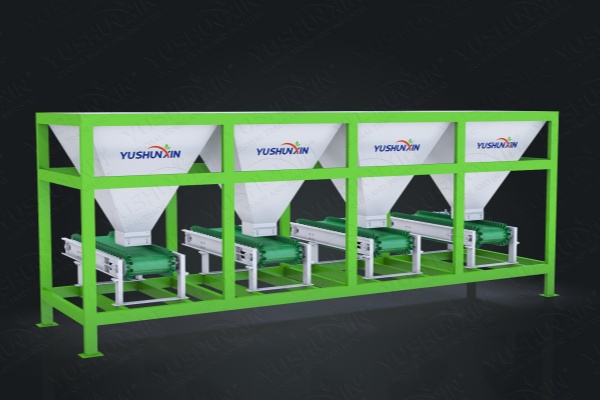
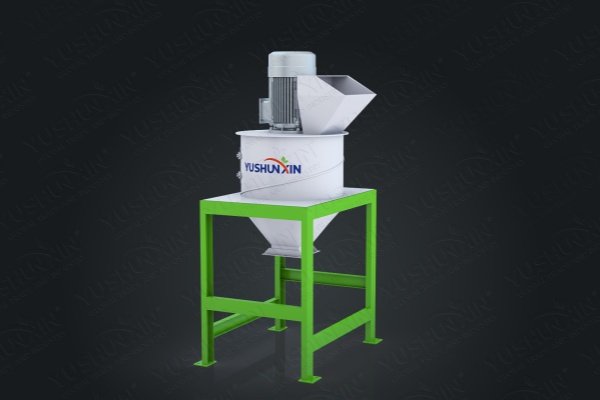
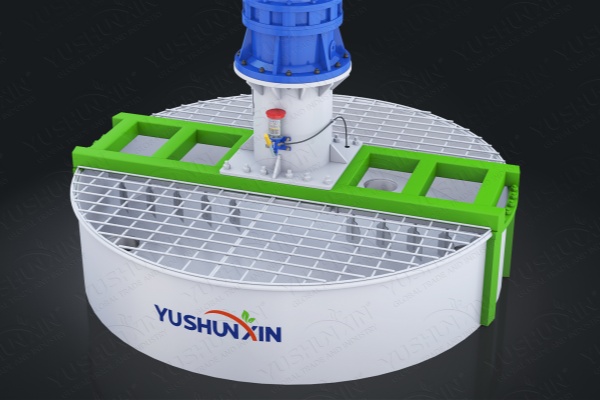
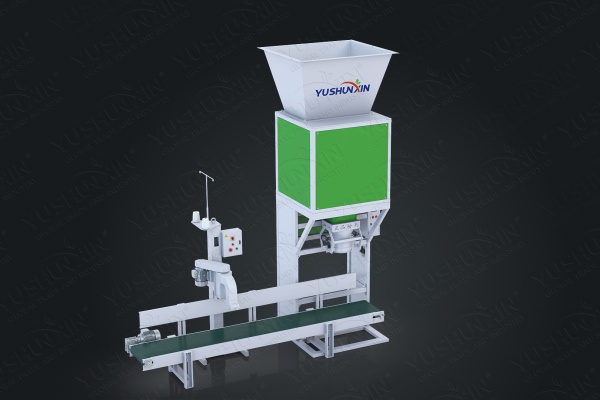
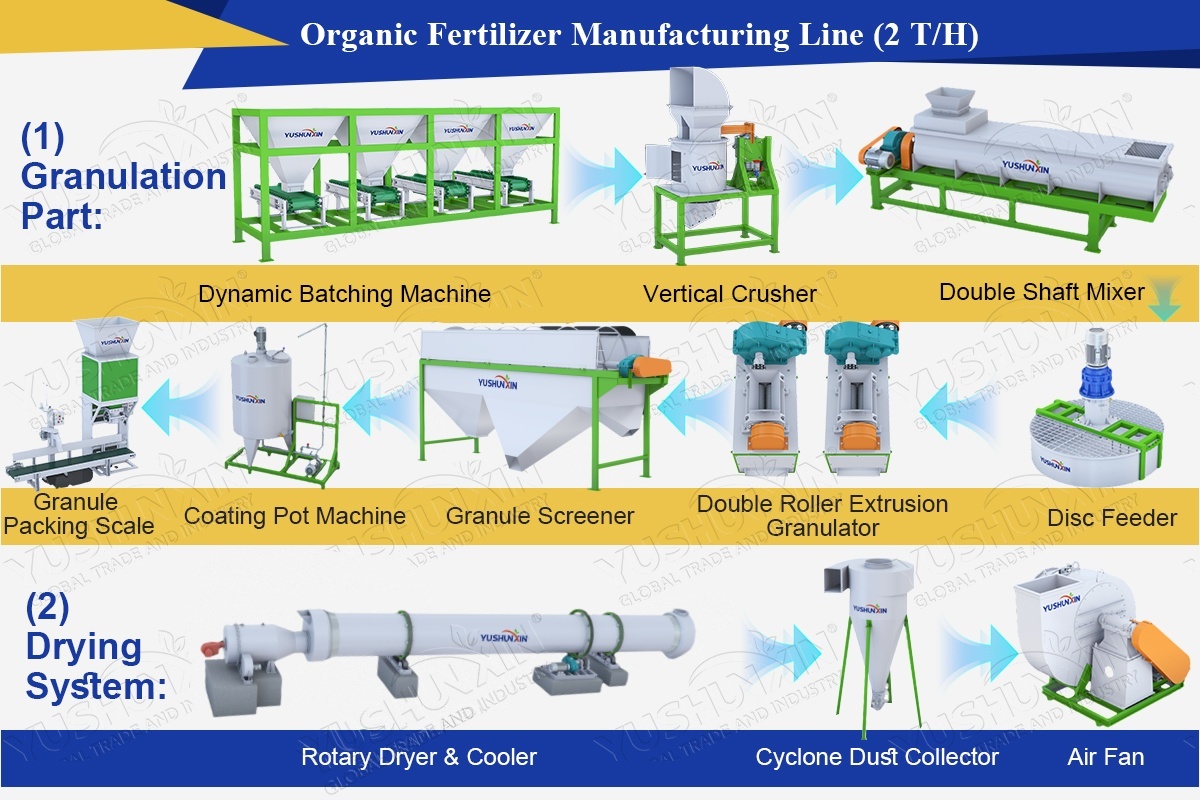
Em quarto lugar, to cater to customer demands effectively, our factory offers the flexibility to design and manufacture accompanying equipment. From mixers and crushers to bucket elevators and conveyors, you have many options for your fertilizer production efficiency enhancement. Adicionalmente, automatic batching machines and rotary screening machines enhance the efficiency of compound fertilizer production lines, facilitating continuous and mechanized operations.
5. What Materials Can Be Used in the Roller Extrusion Granulator?
The double roller type fertilizers granule machine accommodates a wide array of materials for extrusion granulation. These include ammonium nitrate, urea, cloreto de amônio, calcium nitrate, cloreto de potássio, sulfato de potássio, and more. With its versatility and efficiency, this equipment seamlessly integrates into various production processes, ensuring consistent and high-quality granule formation.
Na verdade, water content of raw materials is a key parameter for the double roller granulator that significantly impacts the overall efficiency and quality of the granulation process. When you use our double roller type fertilizers granule machine, we recommend to maintain the materials’ moisture content of 5%-10% to achieve optimal granulating results.
Why to Control 5%-10% Material Water Content for Dry Granulation Roller Compaction?
Why is controlling the moisture important when using YSX double roller granulator? Por isso, several reasons account for the significance of this specific range of water content.
- Primeiramente, you can ensure the proper granular forming during the press granulation process by maintaining the right moisture level in the raw materials.
- If there’s too much water (more than 10%), you may end up with wet finished granules that stick together, forming lumps. Então, it causes difficult separation and impairs the uniformity of your final products.
- Por outro lado, raw materials without enough moisture (less than 5%) might not support conditions of particle adhesion, leading to granules that are too dry and break down easily.
Como resultado, only the moisture content within the recommended range, the particles can adhere together smoothly, resulting in well-formed and sturdy granules. This ensures that the granules are resistant to breakage and can withstand handling and transportation without losing their integrity.
To conclude, finding the right moisture balance is paramount for producing high-quality granules in a double roller granulator. If you aren’t sure about the moisture content of your raw materials, feel free to send them to us. We would be more than happy to carry out an analysis for you and guide you towards the most effective process possible.
Customers often ask about the longevity and durability of our granulation machinery. Além disso, two common question are, “What is the wearing part?” or “How long does it take to replace the mold?”
What is the wearing part?
Primeiramente, let’s understand what worn parts refer to. In Shunxin’s roller granulator, the worn parts are the roller sheets. Por um lado, two rollers are made of special alloy materials to endure high pressure and wear during the dry granulation process. For another thing, you don’t need to worry about the replacement of two rollers. If you normally use and maintain double rollers pressing granulator according to the operating instructions, the service life of 2 rollers can reach at least 6 months. No entanto, when you find that the roller is worn or the granulation quality is getting worse, you should consider replacing it with a fresh roller.
How long does it take to replace the mold?
Segundo, you should know the time for replacing the mold. Geral, in most cases, you may need to replace the rollers within 6 months para 1 year. Além disso, many elements will impact the particular time, including frequency of usage, raw materials’ kind and quality, and so on. To guarantee the performance of the rollers and the efficient operation of this granulator, we recommend that you regularly inspect and perform necessary maintenance. If you see that the roller is worn out or that the granulation effect is poor, it is time to replace it.
Conclusão
Our roller pressing granulator is a reliable equipment. By regularly replacing two rollers and maintaining these molds, you can keep the machine running smoothly and achieve high-quality granulation effects. Contudo, we are committed to providing cost-effective organic fertilizer production proposals. Por isso, choosing Shunxin’s roller granulating machine would be a wise choice. If you have any further questions or requests, we are always willing to provide assistance and support.
A manutenção do seu granulador de extrusão de rolo duplo é essencial para garantir sua longevidade e desempenho ideal. A manutenção regular não apenas evita quebras inesperadas, mas também garante que sua produção de fertilizantes ocorra de maneira suave e eficiente.. Aqui está um guia completo sobre como manter seu granulador:
Etapa 1: Limpeza e inspeção regulares
Primeiramente, para manter seu granulador de prensa de rolo duplo de forma eficaz, é crucial realizar limpeza e inspeção regulares. No começo, você pode começar desconectando a fonte de alimentação e removendo quaisquer materiais restantes. Além disso, você deve usar uma escova ou ar comprimido para limpar os rolos e as áreas adjacentes. Enquanto isso, você pode inspecionar os rolos em busca de sinais de desgaste ou danos. Mantendo a máquina limpa e realizando inspeções regulares, você pode evitar possíveis problemas e garantir uma operação tranquila.
Etapa 2: Lubrificação de peças móveis
Segundo, a lubrificação adequada das peças móveis é essencial para a operação eficiente do granulador de extrusão de rolo. Então, você pode usar os lubrificantes recomendados e seguir as diretrizes do fabricante de nossos equipamentos profissionais para intervalos de lubrificação. Também, você pode aplicar o lubrificante nos pontos designados, incluindo rolamentos, engrenagens, e outros componentes móveis. Importante, isso reduzirá o atrito, minimizar o desgaste de peças bem lubrificadas, e prolongar a vida útil da máquina. Além disso, você pode verificar regularmente o status da lubrificação e reabastecer conforme necessário para manter o desempenho ideal.
Etapa 3: Ajuste da folga do rolo
Em terceiro lugar, o ajuste da folga dos rolos é uma tarefa crítica de manutenção para um granulador de compactação de rolos. Porque, configurações adequadas de folga entre rolos garantem o tamanho e a densidade desejados dos grânulos. Além disso, você deve seguir nossas recomendações para ajustar a folga dos rolos com base no tipo de matéria-prima que está sendo processada. Além disso, você deve verificar e ajustar regularmente a folga dos rolos conforme necessário para manter um desempenho de granulação consistente. Garantindo as configurações corretas de folga entre os rolos, você pode produzir grânulos de alta qualidade e evitar problemas como tamanho irregular de grânulos ou bloqueios.
Etapa 4: Substituição de peças desgastadas
Em quarto lugar, partes do seu granulador inevitavelmente se desgastarão devido ao uso regular. Então, você deve ficar de olho nos componentes que tendem a se desgastar rapidamente, como rolos, rolamentos, e selos. Além do mais, você pode inspecionar essas peças frequentemente em busca de sinais de desgaste, incluindo rachaduras, amassados, ou desgaste excessivo. Quando você notar que as peças estão gastas, substitua-os imediatamente por peças genuínas. Adicionalmente, você pode entrar em contato conosco para que novas peças sejam enviadas gratuitamente durante o período de garantia. Por isso, a substituição oportuna de componentes desgastados ajuda a evitar interrupções operacionais, manter a qualidade da granulação, e prolongar a vida útil geral da sua máquina.
Etapa 5: Otimizando o manuseio de materiais
Finalmente, O manuseio adequado do material é fundamental para a manutenção de um granulador de extrusão a seco. Por exemplo, você precisa garantir que as matérias-primas alimentadas na máquina atendam aos requisitos especificados em termos de teor de umidade, tamanho de partícula, e composição. Também, você também deve evitar sobrecarregar a máquina para evitar estresse e danos indevidos. Adicionalmente, você pode limpar regularmente o sistema de alimentação de material para evitar entupimentos e garantir um fluxo suave de material. Ao otimizar as práticas de manuseio de materiais, você pode maximizar a eficiência e a produtividade do processo de granulação enquanto minimiza o desgaste da máquina.
Conclusão
Geral, manter um granulador de extrusão de rolo duplo envolve uma combinação de limpeza regular, lubrificação, ajustes, substituições de peças, e otimização do manuseio de materiais. Seguindo estas diretrizes de manutenção diligentemente, você pode garantir a longevidade, eficiência, e desempenho de qualidade do seu equipamento de granulação. Porque não só aumenta a produtividade, mas também minimiza o tempo de inatividade e os custos de reparação a longo prazo.
Here at Yushunxin, we take pride in the efficiency and performance of our Granulador de extrusão de rolos duplos. Além do mais, our engineers design this machine expertly to convert various raw materials into granules, commonly in industries like fertilizer, alimentar, and chemical. Além disso, one of the standout features of our granulator is that it produces granules with consistent size and hardness.
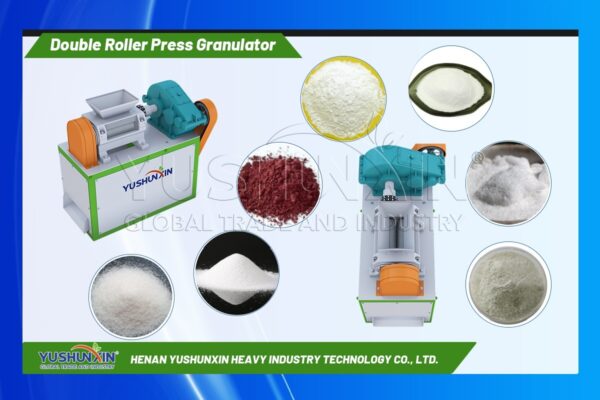
Typically, the final granule size you can expect by using our roller press granulador is in the range of 3-10mm. In other words, you can adjust the machine’s parameters to control the sizes, including the pressure and the distance between two rollers. Além do mais, you understand that granule size matters when it comes to applications like fertilizer production, as it affects nutrient distribution and absorption in the soil. Portanto, we ensure our granulator produce a size range optimal for you needs.
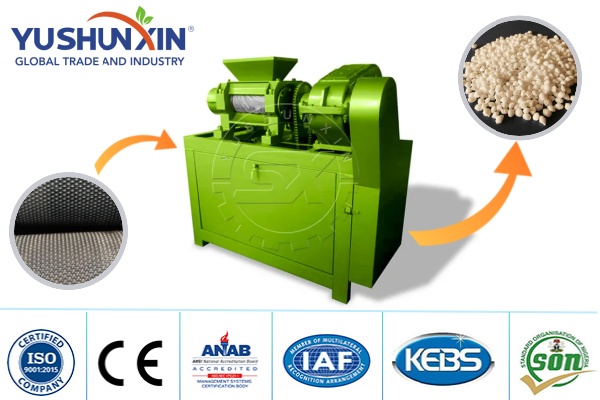
In addition to size, the hardness of the granules by dry roller press granulator is usually around 15-20N/mm2. Por isso, this level of hardness ensures the granules are durable and not prone to breaking or crumbling during handling or application. Como resultado, it depends on the pressure by the two rollers and the composition of the raw materials.
It’s essential to note, however, that granule size and hardness can somewhat vary with different materials and granulator settings. Portanto, operators need to carefully control these parameters to achieve the desired granule characteristics.